
A Feature-Rich Helmet With a Few Details to Verify Before Buying
Its 13.4-square-inch view, four modes, presets and X-Mode stand out; certifications, battery details, warranty and headgear fit need verification.
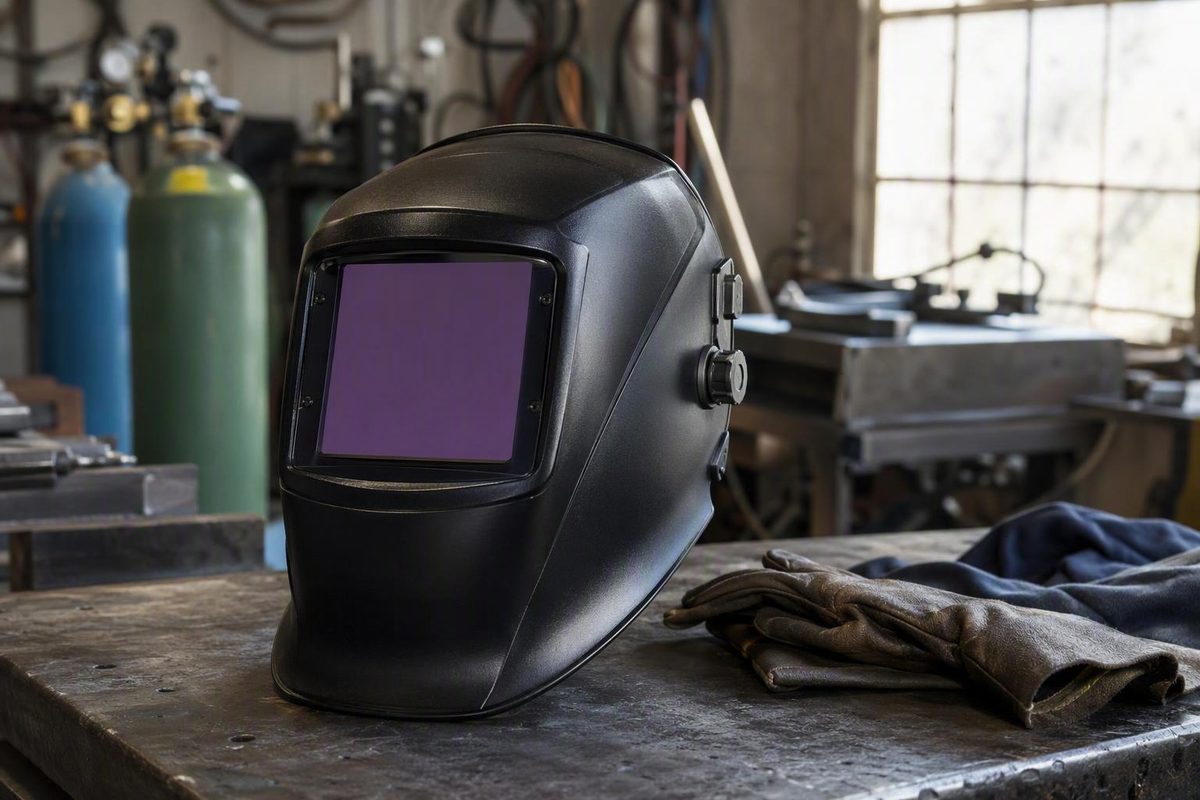
The Miller Digital Infinity welding helmet is a strong premium option on paper for welders who want a 13.4-square-inch viewing area, digital adjustments, four operating modes, saved presets, and electromagnetic arc sensing. X-Mode is the standout feature for outdoor work and positions where the workpiece or shell may obstruct conventional optical sensors.
The reservations are practical rather than cosmetic. Retailers publish conflicting switching-speed and warranty figures, while Miller’s current product pages do not state the battery details, official weight, or applicable safety certifications. Comfort also depends on individual fit and cannot be settled by a specification sheet. Shortlist the helmet for its viewing area and X-Mode, but verify the exact model, documentation, consumables, warranty, and headgear fit before buying.
The short verdict: who should consider the Digital Infinity?
The documented feature set suits welders who prioritize a broad view and regularly move among welding, cutting, and grinding. Miller specifies Weld, Cut, Grind, and X-Mode, along with four arc sensors, AutoSense, digital controls, two memory slots, and InfoTrack 2.0.
X-Mode is the clearest reason to consider the Digital Infinity over a simpler auto-darkening helmet. Instead of depending only on optical sensors to see arc light, it detects welding electromagnetically. Miller presents this as a way to reduce sunlight interference and maintain arc detection when the optical sensors are blocked.
Cyberweld also promotes X-Mode for curved work, hidden or cavity welds, and low-amperage TIG. Those are retailer-described applications, not independently tested performance results.
This is an evidence-based feature assessment, not a hands-on review or controlled optical comparison. It cannot establish that ClearLight 4x is objectively clearer than another premium lens, that the headgear will fit every user, or that the helmet will remain comfortable through a full shift.
Buying decision
Shortlist it if the 13.4-square-inch viewing area, four operating modes, saved settings, and X-Mode address conditions you regularly encounter.
Verify before buying if all-day comfort, raised-position retention, workplace certification paperwork, battery details, or exact warranty coverage will decide the purchase.
Verified specifications at a glance
The principal lens and control specifications are consistent across Miller’s current Digital Infinity ClearLight 4x product pages. Retailer-only figures are identified separately rather than treated as official manufacturer specifications.
| Specification | Documented value | Evidence status |
|---|---|---|
| Viewing area | 13.4 sq. in. | Miller documented |
| Light state | Shade 2.5 | Miller documented |
| Weld shades | 8–13 | Miller documented |
| Cut shades | 5–8 | Miller documented |
| Operating modes | Weld, Cut, Grind, X-Mode | Miller documented |
| Arc sensors | Four | Miller documented |
| Controls | Digital | Miller documented |
| Automatic functions | Auto-On/Off and AutoSense | Miller documented |
| Shade adjustment | Includes half-shade settings | Miller documented |
| Memory | Two customized presets | Miller documented |
| Tracking | Arc time and arc count | Miller documented |
| Cover-lens access | Quick-release cover lens | Miller documented |
| Headgear | Legacy headgear | Miller documented |
| Weight | 1.44 lb | Retailer reported; not independently verified |
| Low-amperage TIG | Down to 5 amps | Retailer reported; not independently verified |
Miller documents the viewing area, shade ranges, modes, sensors, controls, automatic functions, memory, and tracking features on its Digital Infinity Honor product page. AutoSense is intended to set sensitivity based on the welding environment, while the two memory slots store customized presets.
Miller calls the lens ClearLight 4x and describes its color and visibility positively. Those descriptions should be treated as manufacturer claims, not proof that the lens is objectively clearer or better than competing premium lenses. A defensible comparison would require controlled testing of the exact helmets under the same conditions.
The 1.44-pound weight comes from Welding Store, while the claim of TIG operation down to 5 amps comes from Cyberweld. Neither figure is an independent test result or a current official Miller specification.
Miller’s product pages reviewed on September 13, 2026, do not publish an official switching speed, battery type or expected service life, or applicable safety certifications in the displayed specifications. That absence does not establish that a feature or certification is excluded; it means buyers who need those details should obtain the current manual or written documentation for the exact model.
What Weld, Cut, Grind, and X-Mode actually change
| Work situation | Mode to consider | What changes |
|---|---|---|
| Normal bench welding | Weld | Adjustable shades 8–13 |
| Applicable cutting work | Cut | Adjustable shades 5–8 |
| Preparation and cleanup | Grind | Uses the shade 2.5 light-state view |
| Outdoor or obstructed-sensor work | X-Mode | Uses electromagnetic weld sensing |
Weld mode provides the shade 8–13 range for routine welding. The correct setting depends on the process, current, task, and applicable workplace requirements.
Cut mode provides shades 5–8 for applicable cutting work.
Grind mode is intended for preparation and cleanup while retaining the shade 2.5 light-state view. Because this is not the welding shade range, confirming that the helmet has been returned to the correct mode should be part of the routine before striking another arc.
X-Mode changes the method used to detect welding. Conventional auto-darkening operation depends on optical sensors seeing arc light. X-Mode senses the weld electromagnetically, which Miller says helps reduce sunlight interference and allows detection when an object blocks the optical sensors.
Cyberweld additionally promotes X-Mode for curved work, obstructed sensors, hidden or cavity welds, and low-amperage TIG. Its listing states TIG capability down to 5 amps, but that retailer figure does not guarantee reliable detection in every position, process, or lighting condition.
AutoSense establishes sensitivity according to the surrounding welding environment. The two memory presets can reduce repeated setup when alternating between familiar processes, but the operator still needs to confirm that the active mode and stored settings suit the current job.
Before welding, check the mode, shade, sensitivity, and delay against the current manual and your site’s requirements. Equipment instructions and site-specific rules take precedence over general product guidance, especially where PPE or procedure controls apply.
Digital Infinity models: same platform, different finish and price
The Black, Black Ops, Stars & Stripes, and Honor versions use the same documented Digital Infinity ClearLight 4x feature platform. The clearest differences are the finish, model number, and manufacturer-suggested price.
| Finish | Model number | Manufacturer list price |
|---|---|---|
| Black | 296786 | $513.87 |
| Black Ops | 296779 | $567.53 |
| Stars & Stripes | 296780 | $567.53 |
| Honor | 296785 | $567.53 |
The manufacturer pages document the same main viewing area, shade ranges, four modes, sensor count, memory function, InfoTrack 2.0, Legacy headgear, and included items across these four versions. They do not establish a more capable lens or different operating platform for the higher-priced graphic models.
Do not assume that the higher MSRP buys different optics or added functionality unless the dealer provides model-specific documentation showing otherwise.
Match the model number to the desired finish on the product, box, and invoice. Welding Store’s family listing contains inconsistent references among its SKU, selected option, title, and imagery. A family name or product photo alone is not enough when several finishes share a listing. Ratings displayed on a family page should not be treated as separately collected test evidence for each graphic.
Price, rebate, and what comes in the box
Manufacturer list price and dealer price are different numbers. The figures below were checked on September 13, 2026, and may change with inventory, promotions, shipping, or seller updates.
| Model or listing | Price type | Price checked |
|---|---|---|
| Black 296786 | Miller suggested price | $513.87 |
| Black 296786 | Cyberweld dealer price | $399.30 |
| Digital Infinity family listing | Welding Store dealer price | $405.47 |
| Black Ops 296779 | Miller suggested price | $567.53 |
| Stars & Stripes 296780 | Miller suggested price | $567.53 |
| Honor 296785 | Miller suggested price | $567.53 |
The Cyberweld listing for Black model 296786 showed $399.30, while Welding Store’s Digital Infinity listing displayed $405.47. Because the latter contains catalog inconsistencies, confirm the selected finish and model number before treating its price as a quote for a particular helmet.
Miller advertised a $75 rebate for qualifying purchases from authorized Miller distributors dated July 1 through September 30, 2026. Cyberweld also stated that the rebate form must be submitted within 30 days of purchase. Check the complete current terms, eligible seller, qualifying model, purchase dates, submission deadline, and required proof before including the rebate in your budget.
For illustration only:
$399.30 dealer price − $75 rebate = $324.30 conditional net cost
That is not a guaranteed checkout or final delivered price. It applies only if the dealer price remains available and the seller, model, purchase date, and submission satisfy all rebate conditions. Taxes, shipping, and other charges can change the total.
The documented package contains:
- One helmet bag
- Two inside cover lenses
- Five outside cover lenses
- One clip-on top comfort cushion
Miller lists those quantities alongside the rebate and product details for Black model 296786. Cover lenses are consumables, so ongoing availability matters. Ask the dealer for compatible inside and outside cover-lens identifiers for the exact model rather than assuming that every Digital Infinity accessory listing is interchangeable.
Comfort and headgear: what the available reports can and cannot prove
Miller lists Legacy headgear and describes it as having a more comfortable back pad, ring-supported stability, and increased durability. Those are manufacturer descriptions, not independent full-shift comfort findings. Welding Store’s 1.44-pound figure is also retailer-supplied and should not be presented as the official current-model weight without confirmation.
A Miller forum discussion with posts from 2015 and 2016 provides useful but limited fit context. Participants praised the large viewing area and puddle visibility, while some reported that the shell dropped from its raised position or that the headgear migrated upward. Another Digital Infinity owner said lifting the shell until the click stop fully engaged kept it raised.
These reports are anecdotal, conflicting, and tied to helmets sold roughly a decade ago. They do not establish a universal defect and may not represent current production. Suggestions from the discussion—including checking assembly, looking for missing hardware, engaging the click stop, or adjusting the side knobs—are inspection ideas, not documented repairs.
A practical fit check takes only a few minutes:
- Wear the welding cap or compatible head covering normally used on the job.
- Adjust the crown so the shell sits at the intended height.
- Set the rear band firmly without creating a pressure point.
- Raise the shell until its stop clearly engages.
- Look downward and move through normal working angles.
- Check whether the shell drops or the headgear migrates upward.
- Lower and raise the shell repeatedly while checking movement and control access.
If the helmet cannot be tried locally, review the seller’s return terms before ordering. A favorable specification sheet cannot determine whether the headgear will suit a particular user through a full shift.
Specification conflicts and the pre-purchase checklist
Two retailer conflicts require direct confirmation.
First, Welding Store lists a switching speed of 1/20,000 second, while Cyberweld lists 1/25,000 second. Miller’s current product pages do not publish an official switching-speed figure for these ClearLight 4x models, so neither retailer number should be treated as resolved.
Second, Welding Store lists a three-year warranty, while Cyberweld specifies a four-year lens warranty. The difference may involve coverage scope—the complete helmet versus the auto-darkening lens—but the retailer wording does not settle that question. Obtain the term, covered components, exclusions, and claim procedure in writing.
Other details requiring confirmation include applicable safety certifications, battery type and service life, official current weight, replacement-lens identifiers, complete warranty scope, and the method for viewing or resetting InfoTrack 2.0 records. A specification missing from a summary page should prompt a request for documentation, not an assumption that the feature or certification is absent.
Use this checklist before paying:
- Confirm the exact model number. Match it to the finish shown on the helmet, box, and invoice.
- Confirm authorized-distributor status. This is relevant to eligibility for Miller’s advertised rebate.
- Request the current specification sheet and manual. Make sure both documents apply to the exact ClearLight 4x model being purchased.
- Verify required certifications. Obtain documentation for every standard required by your employer, customer, or worksite.
- Confirm warranty duration and scope. Ask which components are covered, what exclusions apply, and how a claim is submitted.
- Confirm replacement-lens availability. Get compatible inside and outside cover-lens identifiers before ordering.
- Test the headgear. Check fit, balance, control access, and raised-position retention while wearing your normal welding cap.
Compare the delivered authorized-dealer price after any valid rebate, not graphic-model MSRP alone. The Digital Infinity deserves consideration when its large viewing area, four modes, saved presets, and X-Mode solve real working problems. Before ordering, match the finish to the correct model number, test the Legacy headgear, and obtain written confirmation of certifications, battery details, replacement lenses, and warranty coverage. Its documented feature set is strong, but it does not support a universal comfort verdict or a claim of optical superiority.