
Which Highly Rated MIG Welder Actually Fits Your Work?
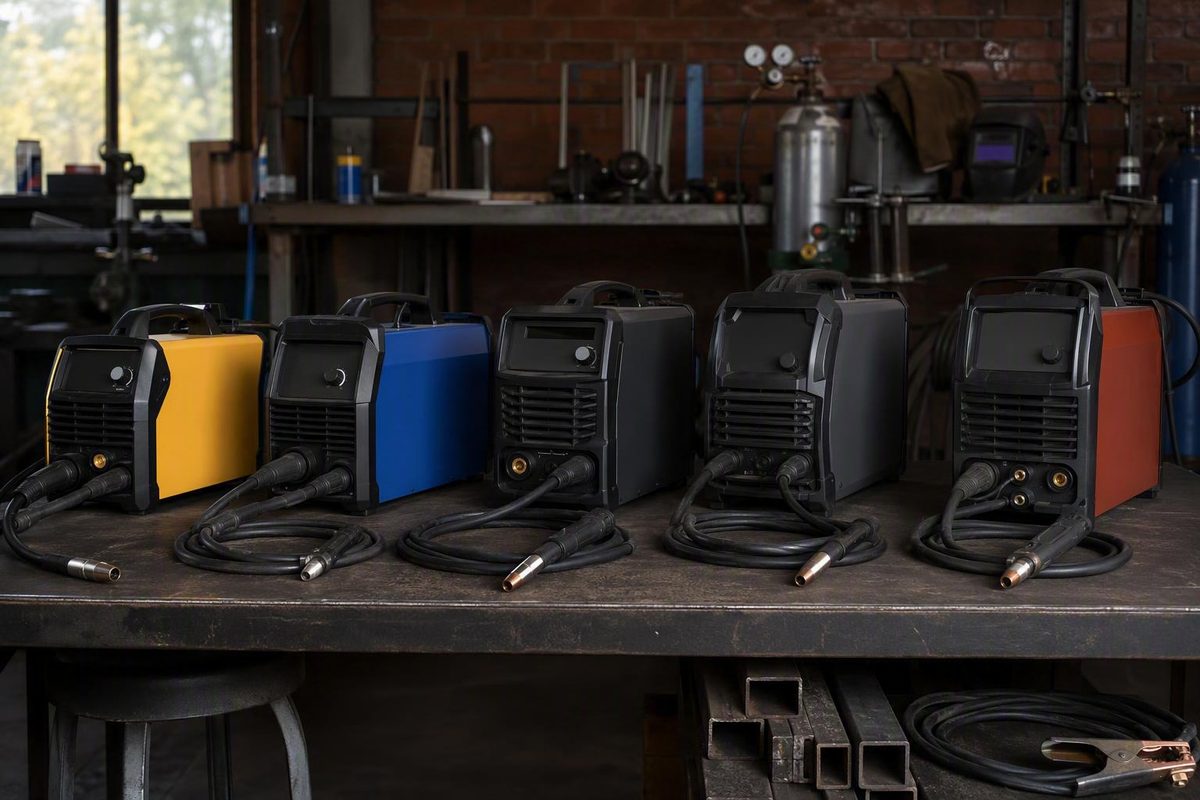
There is no evidence-backed, universally best MIG welder. The right choice depends less on the highest visible star average than on whether the machine matches your electrical supply, material thickness, weld duration, working environment, process requirements, budget, and access to parts and service.
Among the disclosed retailer ratings reviewed here, the Miller Multimatic 215 PRO has the strongest combination of a high score and meaningful review volume. That makes it a credible premium candidate—not an independently tested winner and not necessarily the right purchase for someone who needs only occasional 120V MIG work.
The practical approach is to choose a machine class first:
- Light-duty 120V: automotive sheet metal, home repairs, tack welding, and occasional light fabrication.
- Dual-voltage fabrication: gates, exhaust work, recurring 3/16-inch fabrication, and jobs that may approach 1/4 inch.
- Multiprocess: MIG plus a genuine need for stick, DC TIG, or AC TIG.
- Production-oriented equipment: longer welds, repeated high-output work, and duty cycle suited to shop throughput.
Ratings can build a shortlist. They cannot replace that fit assessment.
Methodology and disclosure: This is an evidence-limited comparison based on disclosed retailer ratings, attributed manufacturer or retailer specifications, commercial recommendations, and owner anecdotes. It does not represent hands-on head-to-head testing. Welder Facts describes its editorial approach and author experience on its About Welder Facts page and states that manufacturers do not pay for placement.
What “top rated” means—and what the available ratings cannot prove
The evidence used here falls into four distinct categories:
- Retailer rating aggregate: An average of customer star ratings displayed by a seller. It indicates customer sentiment within that retailer’s dataset, subject to uncertainties such as review verification, package grouping, and product revisions.
- Attributed specification: A measurable detail—such as input voltage, rated output, weight, duty cycle, or supported processes—reported by a manufacturer or retailer. Unless independently checked, it should not be described as a verified measurement.
- Commercial recommendation: A machine selected or promoted by a manufacturer or seller. It may clarify the product’s intended market, but it comes from a party with a commercial interest.
- Owner anecdote: An individual report about using, liking, repairing, or reaching the limits of a machine. Anecdotes can identify questions worth investigating but cannot establish model-wide performance or failure rates.
What is missing is equally important. The supplied evidence contains no standardized independent test covering all the machines discussed here. There are no common measurements of wire-feed consistency, low-end control, arc starts, output accuracy, spatter, bead profile, thermal cutoff, repair costs, or long-term failure rates.
Accordingly, “top rated MIG welders” means an evidence-limited shortlist of highly rated or frequently recommended candidates, not a definitive market-wide ranking.
Why score and review count belong together
A star average without its review count lacks context. A perfect average based on a handful of ratings is more vulnerable to changing when another review arrives than a slightly lower average supported by a much larger sample.
That does not mean review volume proves better engineering. It means only that the displayed average reflects more customer inputs. A sensible comparison therefore keeps several factors visible:
- Average score: The direction of disclosed customer sentiment.
- Review count: The number of ratings underpinning that average.
- Machine category: Dedicated wire-feed, MIG/flux-core, or multiprocess.
- Operating specifications: Input power, output, duty cycle, and process support.
- Package and support: Included accessories, warranty, service, and consumables.
- Current cost: The actual price of a complete working setup.
What retailer ratings cannot establish
Unless a retailer publishes a controlled test method, customer ratings do not independently establish:
- Arc quality or stability
- Output calibration
- Wire-feed consistency
- Penetration or bead quality
- Power-source duty cycle
- Resistance to dust, heat, or sustained shop use
- Long-term durability
- Repairability or parts availability
- Warranty performance
- Total ownership cost
- Value relative to another model
A high rating is therefore a screening signal, not a performance certificate.
Category labels matter too. A dedicated MIG or MIG/flux-core machine is not directly equivalent to a multiprocess power source. A machine that adds stick and TIG may be valuable to one buyer and unnecessary to another. The shortlist below identifies those distinctions instead of treating every MIG-capable machine as interchangeable.
The strongest disclosed rating signal: Miller Multimatic 215 PRO
The Miller Multimatic 215 PRO has the strongest combination of average score and review volume in the supplied rating data: 4.9 out of 5 from 103 reviews. At capture, the retailer listed it at $2,125, rated it at 230 amps, and described support for MIG, Pulsed MIG, stick, DC TIG, and Pulsed DC TIG. Price, package, and availability remain time-sensitive and must be checked before purchase on the cited Cyberweld multiprocess-welder listing.
That evidence supports a narrow conclusion: customer sentiment displayed by this retailer was highly positive and based on a comparatively substantial number of reviews.
It does not establish the Multimatic 215 PRO as the objectively best MIG welder. It is a premium MIG-capable multiprocess machine, not a budget dedicated MIG unit, and the retailer data supplies no controlled comparison of bead quality, output accuracy, thermal performance, reliability, repair costs, or value.
Who should put it on the shortlist?
The Multimatic 215 PRO makes the most sense for a buyer who:
- Uses MIG as the primary wire process but will genuinely use stick or DC TIG.
- Values one portable power source over separate process-specific machines.
- Can justify premium pricing through frequent use or process flexibility.
- Has confirmed performance on the available input supply.
- Has checked which accessories are included for each intended process.
- Has acceptable warranty and service options.
It is less compelling for someone who needs only gas MIG and self-shielded flux-core for occasional garage work. A simpler machine may leave more of the budget available for a cylinder, gas, helmet, consumables, electrical work, and material.
Why it ranks ahead of perfect-score products here
The argument is not that 4.9 is inherently better than 5.0. It is that a near-perfect score supported by a much larger sample provides a stronger disclosed customer-sentiment signal than a perfect score supported by only a few reviews.
This is a confidence distinction, not proof of superior welding performance. Independently measured wire feeding, low-end control, output accuracy, thermal behavior, or serviceability would deserve more weight where those factors matter to the buyer.
Other highly rated multiprocess candidates
The following machines appeared in the same retailer dataset. They differ substantially in price, process range, amperage, and review sample size, so the table should not be read as a laboratory ranking.
| Model | Retailer rating | Reviews | Captured price | Stated amperage | Listed processes or notable capability |
|---|---|---|---|---|---|
| ESAB Rebel EMP 205ic AC/DC | 5.0/5 | 7 | $4,625 | 200 A | MIG, stick, AC aluminum TIG, DC TIG |
| Miller Multimatic 220 AC/DC | 4.8/5 | 32 | $4,285 | Not disclosed in the collection data | MIG-capable multiprocess machine with AC aluminum TIG |
| Hobart Multi-Handler 200 | 4.8/5 | 15 | $1,549 | 200 A | MIG, stick, DC TIG |
| Lincoln Power MIG 215 MPi | 4.3/5 | 14 | $2,249 | 220 A | MIG, stick, DC TIG |
These ratings, review totals, prices, process descriptions, and disclosed amperages came from the same Cyberweld collection page. They are historical retailer data, not current quotes or independent measurements.
ESAB Rebel EMP 205ic AC/DC
The ESAB’s perfect average is favorable, but it rests on seven reviews. That sample is too small to elevate it automatically over the Multimatic 215 PRO’s broader rating signal.
Its more important distinction is process range. AC TIG matters to a buyer who intends to TIG-weld aluminum. Someone focused on steel MIG may receive little practical benefit from paying for that capability.
Miller Multimatic 220 AC/DC
The Multimatic 220 AC/DC combines a strong average with the second-largest review sample in this selected table. Like the ESAB, it stands apart because it supports AC TIG.
That makes it a different purchasing proposition from a MIG/stick/DC-TIG machine. A fabricator who needs MIG productivity and AC TIG may value one consolidated platform. A buyer who only wire-welds mild steel should compare that premium feature set with simpler alternatives.
Package distinctions require care. Retailers may list the same base machine with different carts, foot controls, torches, or accessories. Record the exact package number rather than assuming every bundle is equivalent.
Hobart Multi-Handler 200
The Hobart occupies a lower captured price tier while retaining MIG, stick, and DC TIG support. Its disclosed customer sentiment is positive, although the review sample is much smaller than the Multimatic 215 PRO’s.
For a buyer who wants three processes but does not need AC TIG, that combination of process coverage and price may matter more than a few tenths of a star. The next checks should be input requirements, duty cycle at the intended output, included equipment, service access, and current package contents.
Lincoln Power MIG 215 MPi
The Lincoln’s displayed average is lower than those of the other machines in the table. That should prompt examination of the individual reviews where available, but the aggregate cannot explain whether customers were reacting to equipment performance, setup, delivery, package expectations, or another factor.
Its shortlist relevance comes from its stated output and MIG, stick, and DC TIG coverage. A value judgment still requires comparable duty-cycle data, accessories, service terms, and actual MIG performance.
What this comparison still does not tell us
The collection data does not provide:
- Identical weld tests on common materials and joints
- Directly comparable power-source duty cycles
- Measured output at common settings
- Wire-feed-speed accuracy
- Arc-start or low-amperage-control results
- Time-to-thermal-cutoff testing
- Long-term reliability or repair data
- A documented ranking methodology
These are highly rated multiprocess candidates. Their star averages are not a proven order of welding quality.
Shortlist for light garage work and budgets below $1,000
Automotive sheet metal, brackets, furniture, lawn equipment, and occasional home repairs often call for a different machine from the premium multiprocess options above. Household-power compatibility, portability, low-end control, and total setup cost may matter more than maximum output or extra TIG functions.
A retailer-selected budget list identified the ESAB Rogue EM 140, Lincoln Electric SP-140T, Hobart Handler 125, and Blue Demon BlueArc 140MSI. The page did not disclose independent testing or enough customer-rating information to name a highest-rated budget winner.
| Model | Machine type | Retailer-described features | Captured price |
|---|---|---|---|
| ESAB Rogue EM 140 | Portable wire welder | Standard 110V household-outlet operation | $643.23 |
| Lincoln Electric SP-140T | MIG/flux-core | Residential-outlet operation; 49 lb; positioned for automotive work, repairs, and fabrication | $727.99 |
| Hobart Handler 125 | MIG-capable wire welder | 120V input; built-in gas valve; claimed capacity up to 3/16-inch mild steel | $545.10 |
| Blue Demon BlueArc 140MSI | Multiprocess | Gas MIG, gasless MIG, stick, synergic control; 19 lb; integrated torch, clamp, and stinger | $307.62 |
The descriptions and historical prices were displayed by Welder Supply’s under-$1,000 category. Stock status, discounts, packages, and prices can change.
ESAB Rogue EM 140
The Rogue EM 140’s stated appeal is straightforward: portability and operation from an ordinary household outlet. That can suit a garage where a higher-voltage circuit is unavailable.
The outlet description does not establish sustained output. Buyers still need to confirm the power-source duty cycle, output range, compatible wire sizes, gas and flux-core configurations, polarity procedure, included regulator, lead lengths, and service arrangements.
Lincoln Electric SP-140T
The SP-140T supports MIG and flux-core and was positioned for automotive work, repair, and general fabrication. Its stated 49-pound weight makes it movable, although buyers expecting frequent carrying may prefer a lighter inverter.
Gas-shielded MIG can suit clean indoor sheet-metal work, while self-shielded flux-core avoids transporting a gas cylinder for outdoor repairs. The polarity and setup procedure must be checked when changing wire type.
Hobart Handler 125
The Handler 125 uses 120V input and includes a gas valve, permitting gas MIG rather than limiting the machine to flux-core. Its claimed ability to weld mild steel up to 3/16 inch should be treated as a qualified retailer application claim, not a universal capacity.
Before relying on that figure, confirm the stated conditions, including wire, gas, joint design, welding position, preparation, output setting, and whether the claim assumes a single pass. If 3/16-inch steel is the normal workload rather than an occasional upper edge, moving up a machine class may be more practical.
Blue Demon BlueArc 140MSI
The BlueArc 140MSI is the outlier because it adds stick to gas and gasless wire welding while remaining comparatively light. Its synergic control is intended to coordinate settings as output changes, but the operator may still need to tune the arc for the joint and technique.
The included torch, work clamp, and electrode holder make the package appear more complete. Buyers should nevertheless confirm what is required for gas service and each intended material rather than assuming every accessory is included.
What owners say about the 140-amp class
In a Garage Journal discussion, participants spoke favorably about Lincoln 140- and Hobart Handler 140-class machines for sheet metal and general hobby use. One Lincoln 140 owner reported thermal shutdown during sustained high-output welding and associated it with duty-cycle limits. These are unverified individual experiences, not controlled findings or model-wide reliability data, as shown in the linked budget-MIG discussion.
The report illustrates a useful buying principle: a compact 120V machine may suit tacks, short beads, and intermittent repairs yet become frustrating when repeatedly used near maximum output. That can indicate a mismatch between machine class and workload rather than a defect.
Dual-voltage candidates for gates, exhaust work, and thicker fabrication
A 120V machine is commonly positioned for sheet metal, repairs, and intermittent light fabrication. When 3/16-inch material becomes routine or 1/4-inch work recurs, buyers often consider approximately 190- to 200-amp dual-voltage equipment; this is broad shopping guidance rather than a guarantee of capacity for every joint or application. Owner discussions likewise disagree about the limits of 120V machines and emphasize matching output and duty cycle to the job.
Dual voltage does not mean identical performance on both supplies. Maximum output, thickness capability, and duty cycle may differ materially between 120V and 230V or 240V operation.
Recurring owner-recommended candidates include:
- Miller 211
- Lincoln Power MIG 211i
- Lincoln Power MIG 210MP
- Hobart Handler 210 MVP
- PrimeWeld MIG180
These are recurring recommendations, not scored winners.
Miller 211
Multiple participants in a dual-voltage shopping discussion recommended the Miller 211. One participant reported using it for work ranging from sheet metal to 1/4-inch single-pass structural beads. That is an unverified owner anecdote and should not be treated as approval for every joint, procedure, or load-bearing application.
The same discussion raised price, portability, parts access, repair costs, and brand support. Some participants favored the Miller, while others preferred lower-cost Hobart, Lincoln, or PrimeWeld alternatives. Prices mentioned in the 2022 Garage Journal thread are historical and should not be treated as current offers.
For work subject to a welding procedure or inspection requirement, follow the applicable procedure rather than relying on an owner’s nominal thickness report.
Hobart Handler 210 MVP
The Handler 210 MVP repeatedly appears as a lower-cost dual-voltage alternative to the Miller 211. Its shortlist position comes from voltage flexibility and owner familiarity, not comparative test scores.
Compare its complete operating data at both input voltages. Also check current package contents, service locations, replacement parts, gun and lead lengths, and any equipment required for aluminum.
Lincoln Power MIG 211i and Power MIG 210MP
The Power MIG 211i is the more wire-focused option in this pairing. Retailer guidance lists MIG and flux-core support, a 41-pound weight, and operation from 120V or 230V through an adapter. Those specifications make it relevant to buyers who want portable dual-voltage wire welding without automatically paying for TIG or stick functions, although the source is commercial retailer content rather than an independent test (Arc Solutions’ MIG guidance).
Additional processes may be useful, but they do not establish better MIG performance. Compare the MIG operating specifications and accessory requirements directly.
Similar names make exact model identification essential. “211,” “210MP,” and “215 MPi” refer to different machines and process combinations.
PrimeWeld MIG180
The PrimeWeld MIG180 recurs as a budget-oriented alternative for buyers open to newer inverter brands. The common tradeoff is between a lightweight machine with an attractive feature-to-price ratio and an established premium machine—new or used—with a more familiar local service or parts channel.
The available evidence does not establish which approach is more reliable. Ask practical questions:
- Who handles warranty work?
- Is return shipping covered?
- Are consumables standard or proprietary?
- Can a local shop diagnose the machine?
- Are guns, connectors, fans, boards, and drive components obtainable?
- How costly would downtime be?
For occasional home use, purchase price and portability may dominate. For a fabrication business, service turnaround and parts access may carry more weight.
Choose by voltage, duty cycle, material, and welding environment
Begin with four questions:
- What is the thickest material welded regularly—not just once?
- What electrical supply is available where the machine will be used?
- How long and how frequently will the welds run?
- Will the work occur indoors, outdoors, or both?
Then add process, portability, package, and support requirements.
Step 1: Define the regular material, joint, and workload
Separate common work from exceptional work. If most jobs involve automotive sheet and occasional 1/8-inch brackets, optimizing the entire purchase around one hypothetical heavy project may be wasteful.
Conversely, if gates, machinery repairs, or 3/16-inch fabrication are routine, buying a small 120V machine because it advertises that thickness may create repeated output and duty-cycle compromises.
Record:
- Base material and coating
- Minimum and maximum thickness
- Typical joint type
- Welding position
- Usual bead length
- Number of repeated welds
- Single-pass or multipass requirements
- Any applicable welding procedure or inspection requirement
Step 2: Match the machine to the real input supply
A 120V machine offers convenient portability, but its required electrical supply still matters. Check the equipment instructions for the required input, plug, circuit, and permitted extension-cord arrangement rather than assuming every household receptacle is suitable.
A dual-voltage machine is valuable when both supplies will genuinely be used. On 120V it may handle mobile repairs or lighter work; on 240V it may provide higher output or better sustained capability.
Miller describes the Millermatic 142 as a 120V wire welder for 24-gauge through 3/16-inch mild steel in a single pass. For the Millermatic 211 PRO, Miller lists a 30% duty cycle at 215 amps and 240V and describes capacity up to 3/16 inch on 120V versus 3/8 inch on 240V. These are model-specific manufacturer claims that show why voltage must remain attached to output and thickness figures (Miller’s first-welder guide).
Do not generalize those figures to every machine with a similar voltage or amperage label.
Step 3: Understand duty cycle
Duty cycle is the available operating time within a ten-minute period at a specified output and under stated rating conditions. A 30% duty cycle means three minutes of welding in that period, followed by cooling for the remainder under those conditions.
The amperage attached to the percentage is essential. “60% duty cycle” is incomplete without the output at which it applies. A rating at moderate amperage cannot automatically be applied at maximum output.
Broad selection categories are:
- 20–30%: Often suitable for short beads, tack welding, and intermittent hobby repairs.
- 40–60%: A useful general range for recurring workshop fabrication.
- Higher ratings: Increasingly relevant where welding is sustained and downtime affects production.
These are shopping categories, not performance guarantees. The general ten-minute definition and ranges are summarized by the Emin Academy MIG buying guide.
A gun may have its own duty-cycle rating. That does not establish the power source’s duty cycle, so check both when sustained welding is expected.
Step 4: Do not buy from maximum amperage alone
Maximum amperage is only one boundary. Practical capacity also depends on:
- Input voltage and available current
- Power-source duty cycle
- Base material
- Joint design and fit-up
- Wire classification and diameter
- Shielding gas
- Welding position
- Surface preparation
- Travel speed and technique
- Single-pass or multipass strategy
- Required weld quality
A high-output machine with a short duty cycle may be less productive for repeated welds than one with sufficient sustained output at the actual working amperage. Likewise, depositing metal on a given thickness does not by itself demonstrate suitability for a load-bearing application.
Step 5: Choose gas MIG or self-shielded flux-core by environment
Gas-shielded MIG generally suits clean indoor fabrication. Solid wire and external shielding gas can provide a cleaner process with no flux slag, but moving air can disrupt the shielding envelope.
Self-shielded flux-core is generally more practical outdoors or where wind makes bottled-gas shielding unreliable. This distinction is also explained in Westermans’ commercial guide to gas-shielded and gasless welding.
Follow the equipment and consumable instructions.
Step 6: Decide whether multiprocess capability is necessary
A dedicated MIG or MIG/flux-core machine is often the simplest choice when wire welding is the only requirement.
A multiprocess machine becomes attractive when added processes solve real problems:
- Stick: Field repairs or work where carrying gas is impractical.
- DC TIG: Controlled work on compatible metals.
- AC TIG: TIG welding aluminum.
- Pulsed processes: Applications that specifically benefit from those modes.
More processes do not prove better MIG arc quality. They provide flexibility, usually with additional cost and setup complexity.
Calculate the real setup cost and verify the machine before buying
The power source is only part of a working setup. A low sticker price may become less attractive after gas equipment, consumables, PPE, electrical work, and missing accessories are added. A higher-priced package may include equipment that would otherwise need to be purchased separately.
Pre-purchase verification checklist
Before ordering, confirm:
- [ ] Exact model and package number
- [ ] Input voltage or voltages
- [ ] Required electrical supply specified by the manufacturer
- [ ] Output at the voltage you will use
- [ ] Power-source duty cycle at the intended amperage
- [ ] Supported solid and flux-cored wires
- [ ] Supported wire diameters
- [ ] Gas MIG and self-shielded flux-core capability
- [ ] Required polarity and changeover procedure
- [ ] Gun and lead lengths
- [ ] Included regulator or flowmeter
- [ ] Included drive rolls and contact tips
- [ ] Spool-gun compatibility, if needed
- [ ] Warranty duration and exclusions
- [ ] Responsibility for warranty shipping
- [ ] Local service availability
- [ ] Replacement-parts and consumables availability
- [ ] Current price, stock status, and return policy
Document the exact package number because similarly named machines may be sold with different torches, regulators, carts, controls, or accessories. This prevents an accessory comparison from being mistaken for a machine comparison.
Costs beyond the welder
A complete budget may include:
- Welding helmet, gloves, eye protection, and protective clothing
- Shielding gas and cylinder purchase, lease, exchange, or deposit
- Regulator or flowmeter
- Solid or flux-cored wire
- Contact tips and nozzles
- Drive rolls and liner
- Replacement work lead or clamp
- Cart or cylinder restraint
- Ventilation or fume extraction
- Cleaning and preparation tools
- Required electrical work
- Spool gun and aluminum-specific accessories
- Spare consumables
Do not assume photographed accessories are included. Compare the written package list.
Aluminum requires a configuration check
An “aluminum-capable” label does not show that every required accessory is included. Depending on the machine and intended setup, buyers may need to verify:
- Spool-gun compatibility
- Suitable drive rolls or liner
- Correct contact tips
- Appropriate shielding gas
- Compatible wire type and diameter
- Required polarity and parameters
Also distinguish MIG aluminum capability from AC TIG capability. They are different processes with different equipment requirements.
Verify the machine when it arrives
Before regular use:
- Match the nameplate and package number to the order.
- Inspect the machine, connectors, gun, leads, and accessories for visible shipping damage.
- Confirm that installed drive rolls and contact tips match the selected wire.
- Check the required polarity for the process.
- Confirm that gas fittings are installed as directed where applicable.
- Make initial test welds on representative scrap.
- Check wire feeding, arc starts, controls, and thermal behavior.
- Retain the packaging until the initial checks are complete.
Use the equipment manual as the controlling setup reference.
Safety and controlling instructions
Welding involves electrical current, fumes, and ultraviolet radiation. Use suitable PPE and ventilation, protect nearby people from arc exposure, and follow the equipment instructions and site rules. Coated or painted material can increase fume concerns, and welding-equipment guidance recommends adequate fume extraction where required.
Inspect cables and wire-feed components as directed by the manufacturer. General online guidance cannot account for every machine, material, building, or regulated workplace; the equipment manual and site-specific requirements take priority, as stated in the Welder Facts safety notice.
Historical prices, discounts, packages, warranties, and stock statuses in this comparison must be verified before purchase.
What the final choice should look like
A defensible purchase decision is specific:
- “A 120V MIG/flux-core machine for body panels, brackets, and intermittent repairs.”
- “A dual-voltage machine for gates and recurring 3/16-inch fabrication, normally operated on 240V.”
- “A premium multiprocess machine because the shop genuinely needs MIG, stick, and DC TIG.”
- “An AC/DC multiprocess machine because aluminum TIG work justifies the added cost.”
That is more useful than “buy the highest-rated model.”
Frequently Asked Questions
What is the highest-rated MIG welder in the supplied evidence?
By raw average, the ESAB Rebel EMP 205ic AC/DC displayed a perfect score, but it was supported by only seven reviews. Several other perfect scores in the dataset also rested on small samples.
The Miller Multimatic 215 PRO has the strongest disclosed combination of rating and review volume in the retailer data: 4.9 out of 5 from 103 reviews. That makes it the strongest rating signal in this evidence set, not an independently proven overall winner. It is also a premium multiprocess machine rather than a budget dedicated MIG welder.
Is a 120V MIG welder enough for 1/4-inch steel?
Do not assume so. Some owners report completing occasional 1/4-inch work with particular machines and techniques, but those anecdotes do not establish universal suitability.
A 120V machine may fit thinner material and intermittent repairs. Recurring 1/4-inch work generally gives buyers a reason to investigate dual-voltage or 240V equipment with suitable output and duty cycle. Joint design, preparation, wire, gas, position, pass strategy, and required weld quality all affect the answer.
For a dual-voltage machine, verify capacity specifically on 120V rather than using its 240V maximum as evidence of household-supply performance.
Is a dedicated MIG welder better than a multiprocess machine?
Not automatically. A dedicated MIG or MIG/flux-core machine may be simpler and more economical when wire welding is the only requirement. A multiprocess machine adds useful flexibility when the buyer genuinely needs stick, DC TIG, or AC TIG.
Neither category proves better MIG performance. Compare input-specific output, wire feeding, control range, duty cycle, gun quality, package contents, serviceability, and support.
Should I use gas MIG or self-shielded flux-core outdoors?
Self-shielded flux-core is generally the more practical outdoor choice because it does not rely on an externally supplied shielding-gas envelope that wind can disrupt.
Gas-shielded MIG is generally better suited to clean indoor fabrication where air movement can be controlled. If a machine supports both, follow its instructions for wire, polarity, drive-roll configuration, and parameters whenever changing processes.
What duty cycle do I need for hobby work or regular fabrication?
For tack welding, short beads, and intermittent hobby repairs, a machine in the 20–30% duty-cycle class may be adequate. For recurring workshop fabrication, 40–60% is a more useful broad shopping range. Sustained production makes higher ratings increasingly relevant.
Always attach the percentage to its rated amperage and conditions. A high duty-cycle percentage at low output does not prove strong sustained performance near maximum amperage.
Conclusion
The Miller Multimatic 215 PRO carries the strongest disclosed rating-and-volume signal reviewed here, but it is a premium multiprocess candidate rather than a universal winner.
Choose the machine class first—light-duty 120V, dual-voltage fabrication, or multiprocess—then verify duty cycle, performance on the available input voltage, required accessories, current price, warranty, parts availability, and service support.
Ratings can narrow the field. The actual material, workload, environment, electrical supply, and process requirements should decide the purchase.